
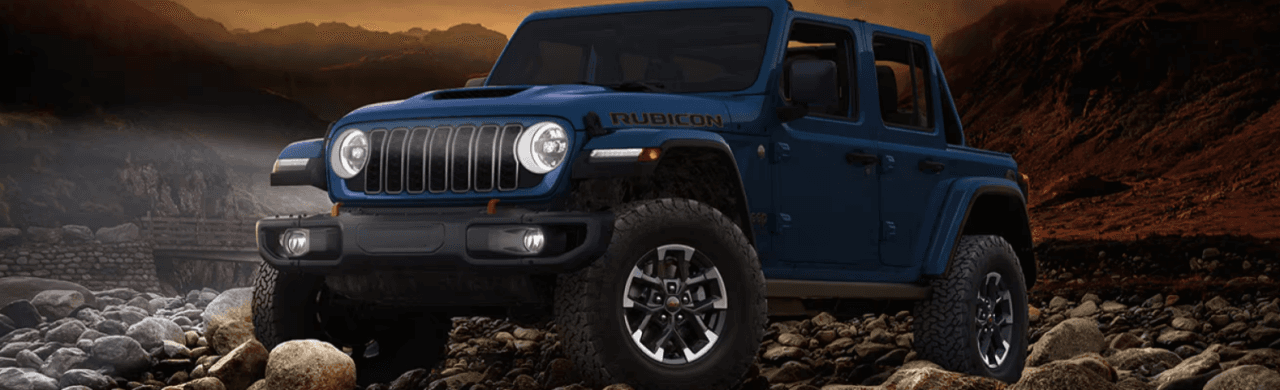
This content was aggregated from local dealer and data and insights provided by the USA Today Network Automotive Insights team using Google Gemini and the Vehicles for Sale Near Detroit marketplace writing team.
When choosing a vehicle like the 2026 Jeep Wrangler, most buyers focus on capability and off-road performance—but long-term reliability is just as important. A vehicle that performs well on day one but becomes costly or inconsistent over time can lose its value quickly.
For drivers considering a Jeep Wrangler near Detroit, where winters are harsh, road salt is common, and road conditions change throughout the year, long-term durability becomes a key part of the decision.
Long-term reliability comes down to how well a vehicle holds up under repeated use, seasonal stress, and proper maintenance.
The Jeep Wrangler is built with a straightforward, rugged engineering approach. Instead of prioritizing complexity, it focuses on durable mechanical systems—especially its frame, suspension, and 4x4 drivetrain. This design philosophy helps it remain resilient in both daily driving and more demanding environments.
For Detroit-area drivers, that rugged construction is especially relevant during winter months and rough road conditions.
The Wrangler’s durability starts with its foundation:
A body-on-frame structure designed for stress and impact resistance
Heavy-duty suspension components built for uneven terrain
A 4x4 system engineered for traction in difficult conditions
These elements are not just for off-road use—they also contribute to long-term stability in everyday driving.
Even on paved roads, this tougher construction can translate into a more durable long-term platform compared to softer crossover-style SUVs.
Like any vehicle, the Wrangler experiences normal wear over time.
As mileage increases, components such as brakes, tires, suspension parts, and bushings will eventually require replacement. This is expected in any SUV and does not necessarily indicate poor reliability.
With consistent maintenance, many Wrangler models remain dependable well beyond typical ownership cycles. The difference often comes down to how well the vehicle is serviced rather than how it is engineered.
Winter is one of the most important factors for local drivers.
The Wrangler’s 4x4 system provides strong traction in snow and ice, making it well-suited for Michigan winters. Its higher ground clearance also helps it handle deep snow and uneven roads more effectively than many standard SUVs.
However, road salt is a real long-term concern. Regular washing—especially underneath the vehicle—is essential to reduce corrosion risk over time.
One of the Wrangler’s biggest strengths is also something that affects long-term wear: off-road capability.
It is built to handle rough terrain, but frequent off-road use can increase stress on suspension and steering components. Drivers who use their Wrangler off-road regularly should follow a stricter maintenance routine to preserve long-term reliability.
For most drivers near Detroit who use it for mixed driving, occasional off-road use is not an issue when properly maintained.
The Wrangler’s long-term reliability depends heavily on maintenance habits.
Key practices include:
Regular oil and fluid changes
Routine brake and tire inspections
Seasonal checks before winter and spring
Undercarriage cleaning during snowy months
Vehicles that follow scheduled maintenance consistently tend to perform reliably for many years, regardless of mileage.
The Wrangler is designed for flexibility.
Some owners use it as a daily commuter, while others treat it as a lifestyle vehicle for travel and recreation. It handles both well, but usage patterns do affect wear over time.
Balanced use—combining daily driving with occasional adventure use—typically results in the best long-term ownership experience.
The Wrangler has one of the highest long-term ownership rates in its class.
That comes down to three factors:
Durable mechanical design
Strong off-road capability
High long-term owner satisfaction
Many drivers find that it continues to meet their needs for years without feeling outdated or limited.
A common misconception is that rugged vehicles are less reliable.
In reality, the Wrangler’s simplicity and durability-focused design often support long-term use. It may require more consistent maintenance than some crossovers, but that is part of its intended engineering—not a weakness.
Yes—the 2026 Jeep Wrangler can be a reliable long-term vehicle when properly maintained.
For drivers near Detroit, it offers strong advantages in winter performance, durability, and long-term usability. The key to reliability is not just the vehicle itself, but how consistently it is cared for over time.
Is the 2026 Jeep Wrangler reliable long-term near Detroit?
Yes, especially when properly maintained and serviced on schedule.
What is the most important maintenance factor?
Regular servicing and winter protection, especially underbody cleaning.
Does off-road driving reduce reliability?
It can increase wear, but proper maintenance keeps it manageable.
How does it handle Michigan winters?
Very well, thanks to its 4x4 system and ground clearance.
How long can a Wrangler last?
With good care, it can remain dependable well beyond high mileage thresholds.
Written for https://vehiclesforsaleneardetroit.com/
By the USA TODAY Network Automotive Insights Team, in collaboration with Dick Scott Chrysler Dodge Jeep Ram and the Vehicles for Sale Near Detroit – Free Press Edition.